In this episode, I’m chatting with four of our Simple Scrapper staff and team members to reflect on what’s truly working well in our scrapbooking lives. We shared the systems, creative ideas, and little victories that keep us inspired, from embracing hybrid approaches to finding joy in our stash of supplies. Our conversation highlighted the importance of celebrating progress, staying organized in our own unique ways, and giving ourselves permission to take time to create. Most of all, we reminded each other that it’s about having fun and carrying forward what brings us joy into the new year.
Links Mentioned
- Register for the 2026 Planning Party
- Project Life App: Apple | Google
- Shutterfly
- Photoshop Elements
- Ali Edwards
- Just Jamie
- Connie Prince
- Elle’s Studio: https://shopellesstudio.com/?selling_plan=9235628287
- Keynote: https://www.apple.com/in/keynote/
- Canva: https://www.canva.com/
- Trello: https://trello.com/
- Watch Cheryl Scrap on YouTube
- Nicole Mackin on YouTube
- Steak Goddess on YouTube
- IKEA Raskog
- Ali Edwards One Little Word
Jennifer Wilson: Welcome to Scrapbook Your Way, the show that explores the breadth of ways to be a memory keeper today. I'm your host, Jennifer Wilson, owner of Simple Scrapper and author of the New Rules of Scrapbooking. This is episode 312. In this episode, I'm chatting about what worked well this year with a group of simple scrapper staff and team members.
This is the first of a three-part pre-party series leading up to the 2026 planning party. Registration is open through November 14th, 2025.
Hey friends, I'm excited to be here for this episode with four [00:01:00] of our creative team and staff members. Uh, if you listen to episode 300, we did this with a very large group not so long ago, and I'm excited to kick off the series of three episodes with, uh, some of our favorite insiders from Simple Scrapper. So what we're doing is we're gonna be talking about what works well for us in our scrapbooking, how do we know what's working well? How do we identify those, and how do we make sure that we're doing more of those things? So what I'm gonna first do is ask our guests to just share just a tiny bit about themselves, their name, and kinda what types of scrapbooking they enjoy so you can get to know them better and recognize their voices as we continue the conversation. Um, Helen, do you wanna go first?
Sure. I'd love to, and thanks for doing this again. This is really fun to have us all together, um, or at least some of us. So what I like to do for scrapbooking, is I like to do 12 by 12 layouts. I [00:02:00] like to do, uh, mini books for travel albums. I like to do interactive things. Um, that takes a lot of my time.
But I really enjoy doing all those little interactive things. And I consider myself a paper scrapbooker, but I really think I'm a hybrid. Because I'm, you know, doing more and more on my laptop as far as printing some embellishments. Definitely printing my journaling onto sticker paper. And then a lot of times I'll take a photo of my layout and get it into Photoshop and maybe so I know what section I want something to go, and I kind of know what size it is. So I'm definitely leaning more hybrid, but I just don't consider myself hybrid, consider myself paper.
I get that. Hybrid is such a broad definition. Everyone who is a hybrid scrapbooker might look at that very differently. Um, but that level of kind of detailed precision you can get when you're bringing your layout into Photoshop and then creating the perfect little, [00:03:00] uh, journaling bit to, to stick on there is, uh, is a really handy skill to have, for sure.
Helen DeRam: Definitely.
Jennifer Wilson: All right. Who's gonna go next?
Tracey Fox: I'm next on our screen here where we're recording, but I'll go. I'm Tracy Fox. Um, I've been scrapbooking, I've now reached that milestone where I can say I've been scrapping over 20 years, which is wild. And I know that's the case for a lot of us who scrap, but you know, also there's plenty of exciting newbies too.
But, um, I'm primarily a paper scrapper as well. Um, probably a little more on the, the paper side of the spectrum even than Helen. Um, I do typed journaling and stuff like that. Um, I like to call myself a square scrapper more than a 12 by 12 scrapper. Because, um, I do every holiday album every year in eight by eight. Um, but I still just am drawn to the square layout. Not the the tall skinnies or the now the long skinnies that are, that are kind
of popular. Um, you know, not, not necessarily portrait or landscape, but there's something about the square that makes me really happy. And [00:04:00] the vast majority of my layouts are multi photo, um, even probably a lot more photos than the typical scrapbooker.
Jennifer Wilson: And you're very much a single page scrapbooker.
Tracey Fox: Yeah. I am, so a lot of my pages end up getting filed into volume based albums or or chronological or something like that. But the, the, the single layout really is the story for me.
Jennifer Wilson: And I would say in contrast, like Helen definitely does a lot of single pages, but she does a lot of double pages as well, and really kind of designing across the spread. All right. Melissa, what about you?
Melissa Magnuson: Yeah, so I, right now I'm doing probably most of my scrapbooking on the Project Life app. And then I need to print a bunch of albums, like yearly albums and I wanna print those as books. But I did do Aligned in a six by eight and just like printed to the individual pages and then put them into an album.
And then I'm do, well, I'm on a break for my holiday albums. So I started at this last Christmas season and then I [00:05:00] kind of worked on it over the winter and then I, I stopped. But that's all paper. Um, so I'm kind of do a mix. I know when I started like over 20 years ago, I pretty much own, I mean, I only did paper. And then I took a break, although in hindsight I actually wonder if how much of a break I took. 'Cause I think I just transitioned into doing like Shutterfly books for a while. And then I came back to scrapbooking, um, kind of more, well, like the, not only Shutterfly, um, but yeah, so I would say right now I end up, I mean it's a mix. Um, but I would say I primarily do a lot of things in Project Life app.
Jennifer Wilson: And are you doing that mostly on your phone or your iPad or somehow like, you know, synched to your computer? I know some folks do that too.
Melissa Magnuson: I'm doing it on my phone, which gets to be a challenge. I mean, I do have like a, a bigger phone, you know, it's not like super tiny. But, um, it can be challenging sometimes, like as far as, you know, trying to figure out what [00:06:00] I'm looking at or zooming in or whatever. But it's, I dunno, it works for me because I can just take it on the go and I can work on it, like on a flight or in the car, whatever.
So it, it works for me right now. So, but yeah, I, I think at some point I'm gonna try to do it on the iPad. I haven't done that yet. I've just been doing it on my phone. So we'll see how that goes down the road here.
Jennifer Wilson: Yeah. I never quite understood it when, you know, folks maybe who were more wise in their years than me would start saying things about not being able to see your phone. And now it's like, I can't see the TV if I take my glasses off, but I can't see my phone if I have my glasses on. And it's, it's just a mess. So I'm in the middle transition period now, so. All right. Jen, what about you?
Jen Johnson: I am Jen. Um, I do only digital. I've only done digital. I did one paper Project Life, uh, back in 2014, and that was plenty. I don't need to ever try that again. Um, I've been scrapping for about [00:07:00] 15 years, all digital, all the time. Um, I do kind of, uh, I definitely do single layouts. Um, I've done a few double, but mostly single. Um, I kind of run the gamut of a lot of, you know, single photos. A bunch of photos. Probably not as many as Tracy Fox does photos, but you know a lot, you know of photos.
Jennifer Wilson: That's like a new quantity of photos. We should put that in our template search of, you know, there's like, you know, 1, 3, 5 7 and then Tracy Fox.
Jen Johnson: And then Tracy Fox level. A hundred percent. Yeah. Yeah. I'm kind of in between one photo and Tracy Fox photos. Yeah. But yeah, so I, I just do single pages. Um, just, I don't, I'm not really a project person at all. I just, uh, make layouts and that's what I do. I'm in, I'm working in Photoshop Elements.
Jennifer Wilson: You print your layouts at home, right?[00:08:00]
Jen Johnson: I do, so my canvas and Photoshop is 12 by 12, and I print out an eight by eight. I'm generally also do square. I like to do rectangle. I would like to do that more, but for me, the math of printing that out on a eight and a half by 11 page is, is too much math for me to figure out how to do that and font sizes. And I know, I know I can do it. It just takes more brain power than I generally have. So I just, I do squares. I'd like to do more rectangles. That's, you know, just a little beyond me sometimes.
Jennifer Wilson: We'll have to come up with some more prompts for the team then, so.
Jen Johnson: Oh no, don't say that. I think really the only rectangle ones I have done have been Simple Scrapper templates, honestly. So, and I, I enjoy them. I think they look great, but printing them out is a challenge
Jennifer Wilson: Oh, I'm sure. Yeah. All right. So as I mentioned at the beginning, I really wanna focus on what is working well. Because [00:09:00] we tend to focus so much on what's not working well and what we are gonna change and we're, we're planning for the new year. This this kind of big visioning. But I think that visioning has to be rooted in what we know about ourselves, what we know that we love, that, uh, creates creative flow for us. That makes us feel like we're having fun. Whether that's simple in terms of minimalist or if that's more complicated and that feels simple to you because it's a joyful experience. Um, you know, Helen mentioned that she likes to do lots of interactive things. Those sometimes frustrate the heck out of me, particularly when they're really small and fiddly, but she has fun doing it.
So that's, that's something that's good for her. So what I wanna do, um, before we get into some of the questions that I have planned, is how do you know when something is working well? Like, what would be, you know, assigned to you that something is working well in your hobby?
Tracey Fox: One for me is when I'm happy with [00:10:00] every layout and every project I make.
Jennifer Wilson: Nice. Yeah, that's a good point.
Tracey Fox: It just, it flows.
Helen DeRam: Yeah, it flows. You feel that creative flow, like when I'm in the flow, like my desk is a mess and I, and I'm just like, one idea is going to the next and I'm just so excited and that feels really good. That's when it's all working.
Jennifer Wilson: It's almost when you're not thinking about it really like.
Helen DeRam: Right.
Jennifer Wilson: Any other thoughts?
Jen Johnson: I think just when the, like, like they were saying, the flow. But you know, you just, you, you could do one after another, but it doesn't seem overwhelming. But you have plenty, you, you have plenty of ideas, but not too many ideas. You know, that kind of thing. And whatever you're doing at that point, um, feeds into that. It's a good sequence of a creativity.
Jennifer Wilson: Well, I think adding onto that, that it doesn't feel redundant. Like, you know, someone like Melissa who works in the Project Life app. You know, yes, there are different [00:11:00] configurations, but ultimately you're working in three by four and four by sixes. Um, but if you're, you know, you're finding there's enough creativity in choosing different cards, obviously we're using different photos, different stories. So it, it becomes fresh and new and it gives you that structure that you know how to do it too.
Melissa Magnuson: Yeah, I definitely agree with that. And I, I know when I heard the question I was definitely thinking like flow. Um, and I was also thinking about like things are, and it's kind of what you just said. I mean, it's, it's probably rehashing, but that's what came to my mind as far as like, it's, it's challenging, but it's not too challenging. Like it's, it's fun and it's fresh and getting a lot done even though it doesn't feel like a burden.
Jennifer Wilson: Yeah.
Melissa Magnuson: Um, yeah, that's kinda what I was thinking as well.
Jennifer Wilson: Well, maybe even like, if there is a stumbling block, which there might be, like, I'm thinking of like stamping. You're probably gonna mess up at some point, but it doesn't make you want to [00:12:00] just put away the stamps. Maybe you've like, okay, I know what I'm doing. I'm just going to reposition. I'm going to use one of my stamp platforms that I hadn't gotten out yet. Um, I'm gonna maybe use different ink. Like I know how to troubleshoot this so that I can get the, the result that I want. So that feeling of, um, I don't know, it's not control, but like empowerment over what you're doing.
Melissa Magnuson: Yeah, maybe almost like fearless where you know, like even if you like unquote mess up. It's like, oh, okay, that's fine. Like it's not a big deal. Like I'm just gonna go with a flow and just, I can figure out how to fix it or how to adjust and I'm still loving the end product and you're not as stressed about that something may have been messed up.
Jennifer Wilson: Yeah. Yeah. So this is kind of a big question, but thinking back over this year, what made you feel the most creative or inspired? Like really, what got your scrappy juices flowing? I don't know if I like that phrase, Helen, go ahead.[00:13:00]
Helen DeRam: For me. Um, there's definitely some, you know, great Instagram scrapbookers that I follow, and most of them are doing those fun, interactive things, and that is really inspiring to me. And also, um, and I know we're not talking about the things that aren't working, but there were some times this year when I was just feeling like, I was just looking at what's the next thing? What's the next thing I need to do, you know? And I was kind of feeling, I don't, not down on myself, but like, oh, I, I don't, you know, I'm not doing all this stuff up here, all this creative stuff. And so I just kinda looked back at what I had done and that made me feel inspired and made me feel good again about, you know, oh yes, I can do this and I did do this and I can do this again. Um, so I did I that a couple times this year.
Jennifer Wilson: Yeah, I think we are often, so much, we're looking [00:14:00] forward. We're not even in the present moment, so that, that rear view mirror, there's a lot in it, but we're not always paying attention to it and, um, celebrating those victories along the way. Go ahead, Melissa.
Melissa Magnuson: Yeah, so one of the, one of the things that came to mind for me was for my birthday, um, my husband had to travel for work, but I just went with, and we kinda made a weekend out of it in Boston and Cape Cod area. And so when he was at like his work function, I brought like basically a bunch of stamps, which I normally don't do a lot of stamping.
Like traditionally I haven't even when I was only paper scrapbooking. Um, but I think recently I was just inspired by I don't know what, and so I decided to buy a bunch of stamps and some ink and so I made myself like a little like activity package to take with, to the, to the hotel. And I just had such a wonderful time just experimenting and stamping, like things that I normally don't do as far as crafting, but I really enjoyed it.
[00:15:00] I can't wait to do it again. Um, and I just felt like very creative kind of that weekend where I could make, you know, and I was, I think I was doing, um, one of the Ali Edwards like Pieces Of Us, or one of 'em, it was one of those little booklets. So I had the booklet and I was just stamping and, and writing and I had, um, I can't remember what, what printer it is, but it's like the tiny printer that prints like, you know, a couple inches by a couple inches and I think their sticker on the back. And I was just kind of doing an approach to scrapbooking that I had never done before and it was just really fun and exciting. And inspiring.
Jennifer Wilson: Do you think you'll do that approach again?
Melissa Magnuson: Uh, yeah, I hope to do it more like I, I actually wanna finish that little book that would like kinda in the same, same approach. And I do want to do more stamping. Um. It's been traveling a lot lately. And so it's been hard. And I know I [00:16:00] just said I had that little kit to go with, but that was like, we were driving to Boston, so I didn't feel like it mattered if I brought like, extra stuff.
Jennifer Wilson: Sure. Sure.
Melissa Magnuson: When I fly it's a little, I dunno, I just don't wanna bring too much, but.
Um, my goal is to have a little like super mini, um, kit that I could maybe bring with and just kind of have that. It just felt like, um, like a really fresh, like young energy when I was doing that.
And, and maybe it's because like as kids you kind of like play with inks and stamps and paints and I kind of had that feeling when I was doing it. So I, I, really enjoyed it. So I just, you know, I, I will get back to it because I really, like I said, I really did enjoy it. But, um, yeah, so that's, that's like on a list of things to do when I, when I get a chance.
'Cause I, yeah, I really just had fun with it. I just felt very free. Like I didn't feel as constrained as maybe I do sometimes in some of my scrapbooking [00:17:00] projects. Um, in a good way. I mean, it was just so, it was fun. It was, it was, uh, I definitely felt creative and kind of more free flow than I might normally.
Jennifer Wilson: It's interesting that you say that you didn't feel constrained because you were, by not being with your supplies and only having specific items. So it's so fascinating, and I'm sure we've talked about this a million times on the show as well, that when you do create those rails for yourself, that's when you find the most creativity and most excitement.
Melissa Magnuson: Yeah, I definitely felt that it was, it was really cool.
Jen Johnson: I was gonna ask, do you think it's because you were in a new environment too? I, I think I, I get weirdly creative in a hotel room. Like, like I can't, I don't have to keep it clean. Like you, you know, I don't have to worry about food. Like all the little distractions of your everyday life are kind, gone. I think it frees you up to be creative. I used to love scrapping when my husband was on a trip and just like sitting in the hotel room just by myself [00:18:00] doing that. I made lots of good pages that way.
Melissa Magnuson: Yeah. No, that's good. I, you know, I hadn't really thought about that, but I wonder if there's something to that where just kind of being away from kind of normal life is enough to just add some extra freedom, I guess.
Tracey Fox: Good craft retreat vibes, but solo crafty retreat vibes, which sounds like a dream to be honest.
Melissa Magnuson: Yeah.
Jennifer Wilson: I know.
Melissa Magnuson: Yeah.
Jennifer Wilson: We can't, you know, get distracted by a good conversation when we're alone with ourselves. So though I end up getting distracted by something, I'm sure, like a YouTube video or something.
Tracey Fox: Something that's been inspiring me this year is honestly just my, my scrappy stash. I know I mentioned how long I've been scrapping and I have done, you know, purges over the years. But I'm really not so great at letting go of my stuff if I can see the potential in it. Um, I've not, I've not struggled too hard with keeping my stash big.
If I think the things in it are still valuable [00:19:00] and still useful, or if I think I might stumble upon that right page for it at some point.
And so whether it's our awesome Stash Bash challenges that are leading me to do it, or whether it's just remembering that I have X, Y, or Z and getting to go, you know, sleuth around for it. Um, I have been able in the last couple of years, and a lot this year, maybe more than usual. I've been able to work some really old product onto my page. Which is like, you know, your non scrapbooker viewer of your scrapbook pages is not gonna know that that's Making Memories from circa 2005. But like I know, and that's really fun for me. Like I used to price this item at Archivers when I worked there back in the day, and now I am, I'm slapping it on a page in 2025 and it feels great. So that's been really fun.
Jennifer Wilson: I am curious if you feel like it's harder to make a dent in your paper stash when you're a very embellishment heavy, you know, paper light scrapbooker.[00:20:00]
Tracey Fox: It is. That's a really great question. It is harder. Um, I think, yeah, my style lately, maybe not so much five years and or more ago, is less pattern paper and more, uh, photos and embellishments with a little bit of pattern paper. Um, so I, I think I have paired down the pattern paper stash a little bit more.
And my most recent kits tend to still be the thing that I reach for first. So like some of that newer, fresher product, and a lot of that's not 12 by 12 anymore. So I don't, I don't quite use as much as I used to. Um, but there's any category within that giant stash. There's like. There's still no real making a dent.
Like, you know, I think we had a challenge in the last few months, sometime this year to use wood veer and it, it's embarrassing how much of it I have, but my room accommodates it, and I, it's organized and I know where it is and I can absolutely part with it. But hey, it came in handy. So, uh, I'm still enjoying it. The, the stash doesn't overwhelm me when [00:21:00] it's organized and I can find stuff.
Jennifer Wilson: Well, that's, I mean, that's what we all want, right? Whether it's our organization or process or photo management. If we're not overwhelmed, that means something is working well there. It's when we get overwhelmed, we have to start picking things apart and figuring out how can we troubleshoot, do something a little differently. So that we can get back to having fun.
Tracey Fox: I think there's like a scrapbook nerd in me that is like, just gets so much satisfaction out of the use of some old thickers or, or something like that. That's like, that's like an added layer of fun on top of all the other great things about the hobby.
Jennifer Wilson: Yeah. When you have to actually add adhesive to your Thickers because they're all like fallen off into the package and they have no adhesive anymore, you know that you've kept that for a while.
Helen DeRam: Or it's a brand that's long, long gone. Like Seven Gypsies. I used some Seven Gypsies the other day. I was like, yes.
Tracey Fox: Feel so good.
Helen DeRam: Yeah.
Jennifer Wilson: I remember when Hambly was going outta business. I bought all these [00:22:00] transparencies, and now I'm like, I don't know how I would use these. I, I, I don't, I don't love this design of them as much as I did when I bought them. Um, but maybe we'll have to come up with a challenge to figure out how to use those too.
Tracey Fox: Yeah. Sometimes mixing a really old product in with your new stuff or with a new approach or idea, it like it sometimes somehow it fits even though it's like the old out of place thing. Um, but yeah, it's just really fun to like reach into the stash and be like, oh, that's a good vintage, you know?
Jennifer Wilson: Yeah. Now, I'm curious, Jen, when you're doing digital pages, do you, like, are you reaching into your stash and using vintage items or never?
Jen Johnson: Almost never, almost never. I have two very specific designers. Um, one is Just Jamie, who I think her style has been so consistent across the board and I was, um, I've been buying her stuff for so many years and I think a lot of it [00:23:00] still applies. So like I have a very favorite alpha from maybe 2012 that I still kind of use.
That is just, it, it's just beautiful in its simplicity and I just love it so much. Um, also Connie Prince, um, who's also been designing forever. She does a lot of like monthly kits and that's very much if I'm doing Project Life, you know, from 2015, I'll sometimes dive into her 2015 stuff just 'cause it kind of matches the rest of my, and I know I've used a lot of her stuff.
So, and, and I think just designers who have been really consistent in their style for, for a long time. But those are maybe the only two that I really do that with. Um, I have folders within folders, within folders of old supplies. And I just don't really, unless it's a challenge or something, I don't really even think I, I have such an influx of new stuff coming in. I'm [00:24:00] very much a look at the squirrel, the new squirrel passing in front of me. You know, I don't look at old stuff.
Tracey Fox: I think that's a great point about the consistency of designers. I think a paper equivalent to that for me. Has been Elle's Studio. Because you know, I was on their design team for a few years, over five years ago now, I think at this point. But I still have stash from when I was a shopper even before that. And everything they put out new still goes with everything that I have in my stash. And so I can just, luckily I don't have to over shop. I can just buy a little bit and something fresh and get that new purchase hit and put it with any of the products I have in my stash, and I know it's all gonna work. It's really nice that way.
Jennifer Wilson: Oh, I love that. I love recognizing that and what that might be for you. Whether it's, you know, a company that does consistent colorways, um, or even, you know, so much of that consistent look and feel throughout the years so that, you know, it's always gonna mix and match well. It's like even, you know, places where you might shop for clothes, you keep going back to the same place 'cause you know it's all gonna go with the other stuff that [00:25:00] you own.
All right, let's dig into systems. So this could be something in photo management, story capture, and, you know, keeping all the journaling. Uh, your rhythm with Project Life, Melissa. Or none of you also are doing anything you'd call Project Life, right? Know you're very much, yeah. Oh, Jen, you are. Okay. Okay. Um, you know, going to online crops, in-person crops, like what is something that you have figured out that this, you know, sequence of things, this way to do something has really worked for you.
And what was it like before you started doing that? How did it, how did it like fix or solve something for you? Go ahead, Jen.
Jen Johnson: So I have a very, um, well, something that I, I use the same process of, uh, going through my photos. I, I, it's just a, a really good process. I've been doing it for years. I have checklists in my notes app, and I always know where I am in the process. It's a super [00:26:00] long process. I know my bare minimum, I have not done photos as much this year as I did the past couple of years, but I, I still know.
That I can get my bare minimum, which for me is picking out some photos for Project Life and writing a little summary. If I can get that done every week, then I'm fine. But I like to obviously go deeper. So that system has been working well for me, for years. My other system that I started a few years ago, but I really got into it consistently is the way I plan out my layouts. Which I call it my Roman Empire 'cause I'm thinking about it all the time.
It's obsessed with it. I love it so much. And it's basically, I got a lot of, I know I've talked about this a million times in crops and stuff, so I, I don't know if I've mentioned it here at all or to you guys at all. But it's, I kind of took a lot of inspiration from paper scrappers that I would see who would print out their photos, slip 'em into page [00:27:00] protectors and kind of have them in their album how they want it. And then you'll look through your album and, oh, put a sketch in that pocket, or put a, whatever, you know, a product that you like. And they're kind of writing the journaling a little, you know, kind of piecing things together before they really start a layout.
And that just really translated well for me to just make a big, giant Keynote document for, I have to do it quarterly 'cause it gets real big. Um, so I just, I plan out my layouts that way, you know, and I can flip through it, you know, and if I have a template or a sketch or a product or something, I can always just super quickly find, um, pictures to go with it and journaling to go with it. And it just, it lights my brain on fire. It makes me so happy to just look through it. And I always get ideas and it takes a lot of [00:28:00] work, and it's really, I have to keep feeding it, you know, it's like, it's my sourdough, I gotta keep feeding it. And it, but it's, it's so worth it to take the time to, to do it, and it just, it makes me really happy.
Jennifer Wilson: All right. So for those who don't, who can't like envision this, you know, Keynote is Apple's version of PowerPoint. Um, you could do something similar in Canva. But the idea of creating like a digital vision board that has your photos, your, your template, you know the products you wanna use, maybe some journaling. And I imagine Jen, that like when you're like, you have an idea or you have an assignment, you, you start a new page and you're like, okay, I know I need to start with this thing.
'Cause I had this idea, or I know I need to use this template. And then that's, then you just start adding stuff to it. And I think so often we get all these kind of jumbled in our brain that allows you to kind of visually make a list of all the things you need for your layouts.
Jen Johnson: Yeah. And, and I've, I've looked at stuff like tr and, and it's [00:29:00] so weird because I go very between very extremes. Like I, I need a very plain to-do list. Like Trello is too much for me visually, but I need to see my layout, like how I'm gonna, you know, do it. Seeing it this way is because I'm looking at one thing at a time.
I guess I'm not looking at like every layout I wanna make for the year. I mean, you can view it that way, and it's also fun to view it that way. But I'm just kind of, it, it, it's like I'm flipping through a physical scrapbook where people have just put their photos into a page protector. And, and that way, even if, um, I don't ever make those pages, which I'm, I'm never gonna make all the pages I plan out. I just never will. It's, it's way too much. But, you know, if someone wanted to say, Hey, what are your favorite photos from, you know, my, my photos library is a mess. It's, it's way just too messy. But, you know, somebody wanted to look through my Keynote. They would see, like, [00:30:00] this is, I mean, who wants to look through my Keynote? Nobody. But, you know, it's kind of like a scrapbook in itself of just ideas and journaling and photos and stuff. And, and it's so much fun and I love it. It helps me scrap really quickly.
Jennifer Wilson: Do you carry over ideas from quarter to quarter? Or if you haven't done it in that quarter, do you abandon it?
Jen Johnson: No, I, well, I guess, what do you mean carry over?
Jennifer Wilson: Like if you had an idea that you didn't make, would you add it to your new version for the next quarter, or would you just like let it go and say, I'm not gonna make this one?
Jen Johnson: Oh, no, no, no. I keep everything. I have stuff from, yeah, no, no, no. I'm, I'm not getting rid of these beautiful ideas. No. The, the, the quarters are just like seasonal. So I can, like, I, because I'm on creative teams and I have products pretty regularly seasonal, I scrap seasonally. So I can go back to my [00:31:00] 2019 fall Keynotes. And still have all those beautiful ideas that I just haven't scrapped yet.
So I can use all that product for that. And, and I just, even when I'm not doing for cts, I just kinda like to scrap fall things in the fall and Christmas things and the Christmas. So I can go look through old stuff and yeah. I keep all of it. Yeah. Yeah.
Jennifer Wilson: Well, I like that idea too though. I think that's, uh, that translates to what, however you like to scrapbook, of keeping your ideas together in some sort of boundary that you like to scrapbook. So whether that's seasonally or monthly, or maybe you only do that for parts of the year. But like you have all your fall ideas and you tuck them away until next fall because you know, you really only wanna scrapbook fall with your, you know, pumpkin spice latte in hand.
Jen Johnson: Yeah. And I do do that even if I don't have, um, a specific idea. Sometimes I, I, it's kind of almost my wishlist also. Because, you know, if, if my store puts out 30 [00:32:00] fall kits, I'm not gonna have time to use all those. But I'll put my favorite ones into one single, you know, slide. This is like fall kits that I like. And I'm able to, to kind of keep all those ideas together.
And it's kind of fun to look at like, oh, I liked that fall kit in 2019 type of thing. 'Cause I, I have been kind of doing this for years, but really consistently, I started last year. And it's been a lot of fun.
Tracey Fox: I'm honestly kind of envious of that type of workflow where you, as a digital person, you're able to have everything, kind of all those different types of pieces put together visually in one place to grab from. Um, you know, for me that I, I actually have a similar workflow and I'm making, uh, business deck at work. But, um, for, for paper scrapping, it's more like my, my whole photo flow is digital and then by the time everything's physical, I'm like grabbing items and putting them in piles to save for future layouts and stuff like that. And it's, I don't know. That sounds, it sounds [00:33:00] really cool, Jen.
Jen Johnson: It's, it's been really fun. And, and there's um, a couple of paper, I watch a lot of paper scrappers on YouTube. 'Cause there really aren't a lot of Digi. Except for like Cheryl, who's wonderful. I mean, if anybody knows anymore, like let me know. But I watch a lot of people, I love just seeing people's processes and you know, like how they collect their ideas and how they do that.
So just like watching, um, Nicole Mackin does that for hers. If anybody wants to watch her video, she'll put stuff in and she works with a lot of collections and she's like, oh, that goes here and that goes there. And I can't remember the lady's name, but her name is Steak Goddess. She does that with a lot of vacation albums. And I just love to watch people like put all their stuff together. It makes me wanna put all my stuff together.
Jennifer Wilson: It's really inspiring, for sure. All right. Who wants to share next? Okay, Helen.
Helen DeRam: So I always have had notebooks, um, just like a little, like, I don't know, nine by [00:34:00] 12 ish notebook. And everything goes in there. My, you know, thoughts on things I want to scrap. Um, sometimes just working out journaling. Sometimes I'll just like stamp off on it if I need to, but it's just kind of an everything notebook.
And, um, the, the problem is I'll do like a page or a couple pages of, okay, I need to do this and this and figure all this out. But then I don't know where it is in the notebook. So I finally, um, last year did a little bit of, you know, the bullet journaling idea with just having an index. Numbering all the pages and then, you know, being really diligent with updating my index on, on what I have throughout the notebook. And that's worked out really well for me this year. Um, I'm really happy with that process so I can keep track of the projects I wanna do and ideas for layouts and, and all the things.
Jennifer Wilson: I love [00:35:00] that. I don't know if this translates perfectly, but one tip that I picked up more than 20 years ago now, and it was just, it was just in a work situation, somebody using their notebook, you know, and you draw a line for the next meeting or whatever, when she was, had taken the action items or no longer needed that information. She would just draw a line through it. So that when you're looking back through the things that don't have lines are things that need something to be done or an idea still to use. Um, and it really depends on how you're using it. But I, I still do that to this day so that when I'm flipping through my many notebooks, I know that this still might be relevant. I might wanna look at this again versus the, if I cross it off, it's, it's dead to me.
Helen DeRam: That's definitely a good idea. 'cause a lot of it, you know, there's pages on and that's just stuff that's not important anymore, you know? So, Yeah. That's a good idea.
Jennifer Wilson: Because sometimes there's a brilliant idea like written down next to chicken scratch or you know, I have this whole page here [00:36:00] just of a list of all the layouts that were in Spark Magazine. 'Cause in order to determine how many pages are going to be in it, I need to know how many layouts and what shape they are.
Helen DeRam: Yeah.
Jennifer Wilson: Um, and so I won't need that again.
Helen DeRam: Right, right.
Jennifer Wilson: So, but you know, the previous page had some really great ideas for something that I wanna do in 2026, so.
Jen Johnson: I found too when I did kind of bullet journaling things years ago, I'll just cross out the whole page and you know, once I've kind of used most of the things, I just put a big X on the whole entire page so you can still see it. You know, some things you can carry over to the thing, but like the. Best is like flipping through your notebook and just all these Xs, like you've just done all these things. It makes you feel so good.
Jennifer Wilson: Well that works even if you're like, say there's one nugget that you're carrying over to a new list, but you know that it's safe somewhere else and that you can cross off the other parts of it. But I do think the index is, is something that's very genius if you have, if you're using the same notebook again and again and again, and [00:37:00] you just can never find like the one little box that has the thing you're trying to remember.
Helen DeRam: Yes, definitely. And the other thing sort of related in the same notebook, and we talk about it a lot, is just writing down like the little tiny tasks you need to do. So you know, when you come back to your desk the next day or a week later. Oh, okay, I need to write the journaling. So I've got, I got to the point where I, I needed that motivation of just like the one tiny little task. And maybe that was all I did that day, but so many times I was coming to my scrap desk and I'd start scrolling through Instagram or doing whatever and sitting there like, Hmm, now what?
Jennifer Wilson: Yeah.
Helen DeRam: That list of just those little things, um, helped a ton and is still helping.
Jennifer Wilson: Yeah, yeah. It sounds awesome. All right, Melissa.
Melissa Magnuson: Yeah, so my system, well the system that works really well for me when I'm able to do it [00:38:00] is I go to Peggy's Monday night crop. And I, and I actually use that, I mean it, I do photos right as a photo focus crop. And I kind of do that. But really I end up kind of morphing that into, um, going through my photos for the last week and deciding what would go on the page in Project Life app for my yearly album. And then I usually try to write the journaling for that as well, like in the same space. And even if I can, I start the next week. So when I'm able to do that, I'm able to stay on top of the yearly album really, really well. And I feel like really good about that. And then I know we're not exactly talking about challenges today, but a challenge is like if I, if I miss that crop due to whatever is going on in life, I need to figure out like how I can recoup that so that I don't get too far behind because. Like, especially with the app, I feel like if I get too far behind and I'm pulling photos from the [00:39:00] camera roll, it gets to be like too much scrolling and that's no fun.
So when I'm able to do that, yeah, scroll, uh, it's just a bit much. And I know like I could put into folders and things and I've done that and it can work.
But if I'm able to stay on top of the weekly documenting, that makes a huge difference. And then I know when I, host a creative challenges crop, and that's once a month. But then when I get to that, I feel like I'm ready and energized. 'Cause I, I feel like I'm in a good place with my weekly project that I can take on some of the creative challenges with a little bit more gusto. Um, yeah. So anyways, when I'm able to do that, that it works for me, like that whole process. Just when I'm not able to attend that crop, I need to find like a backup or I need to like carve out some extra time to, you know, just so that I don't get too far behind.
Jennifer Wilson: Well, and the thing that, uh, about knowing what works well is it doesn't require perfectionism of you. That if you, you can always go back [00:40:00] to it and kind of get back in the groove. And that's what most of us have to do a lot of the time with the things we know are working well, we get distracted by the shiny object.
Oh, I bought stuff for a project, again, Jennifer. You don't, you don't finish projects. You need to make layouts instead. Okay. So I, I keep learning and I keep improving and you know, now I'm not going to do a December Daily this year. Anyway, that was an aside, but, um, yeah, thanks. Melissa.
Tracey Fox: Uh, so a, a system that's been working for me this year is in the realm of product organization. And that's that, um, I was kind of late to the party on, um, Ali Edwards Story Kits, uh, when, when those were wrapping up. And so I did that for probably about the last year and a half of those being a thing.
And I amassed all these, you know, six by eight plus cardboard envelopes that had string enclosures. And prior to that, when I was a kit subscriber, I was really as a customer of kits, right? I would just like, I would break them up immediately. And [00:41:00] like store, you know, even though they, they coordinated, it was just kind of like, no, I'm gonna put all of the embellishments over here and I'm gonna put the paper in my paper stash and I'm just gonna work with all the products outta my stash.
And that, that honestly used to work for me, especially with kits that were a little bit more, like, a little bit of this, a little bit of that. But those kits are, so, the Story Kits were so cohesive and themed that I really wanted to keep them together. But my storage solution brain didn't like having all those unlike items together.
And the envelopes were such a mess because I would start unwinding string and getting them out, and my cats then would come attack the string. And by the time I would dig through a number of those envelopes and maybe risk bending things, putting them back in. Um, and I'd have this pile of kits like next to me instead of like organized products.
So. Um, in the interest of, of getting those more used up and actually using those products, um, with, you know, months and months of kits that I had accumulated. I did, [00:42:00] um, a very similar storage solution to what I do for six by eight stamps already, which is the clear envelopes and one of those fridge bin containers that fits all of them. Now, the paper does not fit in there, right? Because the paper from Ali Edwards, uh, Story Kit or, you know, one of the kits that it is like the, it's bigger than six by eight, so that it can accommodate, um, being outside of pa page protector in a six by eight album. And so it won't fit in those big stamp envelopes.
But that's actually nice because what I did was I put all the embellishments into those big clear stamping envelopes, labeled the envelopes with just a post-it and, you know, scroll down there what the, what the Story Kit theme was. And then in between each one of those envelopes in that bin, I have all the papers from the kit. So papers and cards are just kind of loose in there, and I can rifle through, uh, the kits are organized alphabetically by the, the name of the theme, and and it's sitting right next to me in a Raskog cart. So [00:43:00] as I'm scrapbooking, I can kind of say like, oh, well this, this story that I'm telling right now has these couple of themes.
And so, okay, what kind of Story Kits do I have that might have products that coordinate? So that doesn't always mean that they coordinate by color or pattern and all that kind of stuff. Sometimes I'm pulling things to make sure that's working. But it's really fun because it's like almost everything I'm scrapbooking is good.
So let me take a look at the Good Story kit and see what I can find and I'll just go flip through. You know, let me look at Good, Happy, and you know, it's a, it's a travel page, so let me grab Explore, Wander, et cetera. And um, I ended up going ahead and organizing my other kits that size, um, in the same way in another level of the cart. So all of the Ali Edwards travel kits I've bought, I did buy the One Little Word kit this year, and it's the same size. And so I just kind of have a really nice organization system for kits of that size right now where that used to be an incredibly challenging size for me to go back and dig [00:44:00] through the product on. And now I'm getting a lot of it used up.
Jennifer Wilson: Yeah, you're making it so accessible to, to incorporate in what you're already doing. Rather than having to go outta your way to go dig the kit out. And then, as you said, unwrap the string and all. And do all the stuff.
Tracey Fox: And I have e even though I thought like, oh, well this will be great. 'Cause once I finally use enough of one of the kits, I'll go ahead and disperse it into my stash or whatever it, I just keep using it and using it, and I still have yet to finish. Right. Even I, I've definitely not killed any of those kits, right. But I still have yet to get to the point where I've used up enough where I'm like, well, this, this doesn't need an envelope anymore. Like there's still just so much product.
Jennifer Wilson: I think, yeah, there's kind of an endless number of ideas. Um, I kept coming up, like even just for one kit I remember I just kept coming up with ideas and I'm like, I can't scrapbook all these things because there's other things that I want to scrapbook, so.
Tracey Fox: Yeah, it's almost like I'm doing it in reverse now, where like, you know, some of the kits, some of the kits I [00:45:00] didn't do anything with even at the time. But others I would jump on and use the ideas and do the stories. But for the most part now it's like I scrap what I want and then I go looking through the kits to see if any of those items support. And a lot of times they do and I get to mix and match and it's really fun.
Jennifer Wilson: Yes. I love all these ideas.
Helen DeRam: Yeah, that's really fun. I've done that too. I, my organization of it is not at the same level as yours. But yeah, that same idea of kind of like, oh, I think I have a kit that might fit this, and then hope that the colors work.
Tracey Fox: Right. Or sometimes you even find like one or two pieces that say the right thing, you know? And maybe they're a neutral color or maybe you can introduce a new color and make it work. Um, but it's, yeah, they're the sent, it's like kind of like sentiment searching, you know? Whereas a lot of my other, um, stash location is more about, um, color or texture type of item. This is, it's more thematic. And I think that that's working really well for me.[00:46:00]
Helen DeRam: Yeah, it's actually easier. 'Cause I did, you know, the Story Kits like halfway through I did that thing where you break 'em up and then you like, I have like a container just with all the die cuts all separate. But they're all kind of specific sentiments. So I can look through there for a size or a shape, but that's not the right one. That's not the right one. Or I'm looking for a specific sentiment and good luck finding it. So the kit kind of keeping the kits together but in a way that's accessible seems to be the sweet spot, at least for me. And it sounds like for you too.
Tracey Fox: Mm-hmm.
Jennifer Wilson: Well, I love all the different systems that were mentioned. They're all, we're all tackling different parts of our hobby, and it's not that any person out there in the world listening needs all of these. But you might need one of them to improve your workflow, to feel less overwhelmed, to have more fun, um, and incorporating it where it will streamline and make your life [00:47:00] easier. Is kind of the, the best place to start. 'Cause it's not about having, you know, a perfect, uh, automated everything. 'Cause that's, that's not fun at all. We wanna make sure that we're doing things that work well for us. All right, so the last question here is, what victory are you most proud of?
And of, and of course, why? Like what thing that you've accomplished, baby step you've taken, you know, why are you proud of it? Like, why is it special for this year?
Helen DeRam: I completed a, um, travel mini album from 2022, I think it was. I had gotten it to a certain point, um, when I think whatever year it was, maybe 23. Um, for Spark Magazine, we had done a series for travel where it was, you know, where we went, what we ate, who we met, things like that. And so I had worked on that travel album with those prompts, and then [00:48:00] when we got through those prompts, I kind of put it aside, but it didn't, I did, I felt like I wasn't finished with it.
And actually when I was working on, in my new journal with my sort of bullet list process, uh, that was on the list. And I was like, you know what? That's, I can finish that. It's not, there's not a lot that still needs to be done. And so, I had done a lot of, um, journaling in the moment that I had, but I hadn't really used.
So I went through and I typed up all the journaling, just like day by day journaling. 'Cause the, what I had done before was not day by day, it was more summary. So I had done that and then there was a few more pictures that I wanted to add. So I just went right in. I did kind of like the day journaling, a couple pictures.
I did a few interactive things, which was fun, but not too complicated to make myself crazy. And I was able to finish it in, I don't [00:49:00] know, like a couple weeks. And it just felt really great. So, um, really proud of that one this year.
Jennifer Wilson: So this is your trip to Maine, if I'm remembering correctly.
Helen DeRam: Oh, that's still on the list to be done.
Jennifer Wilson: Oh, okay. Okay. Sorry.
Helen DeRam: Yeah, no, that's okay. It was a much smaller trip. It was just, you know, Door County, Wisconsin. We go there almost every year and I still, even though we go there every year, I just really loved to document it in some sort of way. 'Cause we do different things and it's just a favorite place.
So, um, so yeah, it was a Door County trip and I did a really nice title page. I like a title page. I always leave to the end. And I was able to, I still had all the product, um, that I was using for that kit. It was mostly Heidi Swapp, one of her travel collections, and I had that in a big envelope, so I was able to get all that kind of back out.
That's where I used some of my Seven Gypsy product as well. Um, yeah, it was really fun. I did, you know, [00:50:00] um, some stamping and I was able to get creative and get all my journaling in there, so, felt really good.
Jennifer Wilson: Wonderful. I need to like figure out some like applause sound that I can insert into the podcast.
Helen DeRam: Yes, thanks.
Tracey Fox: I've wanted to use the zoom reactions for so many of the wonderful things you've all said.
Jennifer Wilson: Nice.
Tracey Fox: The, the victory that I'm most proud of is, is kind of an interesting one and it's, it's really more of a season of life kind of thing. And it's just kind of like how the victory for me is just how chill in zen I have become about scrapbooking. To the point where in the grand scheme I'm probably creating less. But I am really happy with everything I'm creating. Everything feels just easy and fun and I never really sit down at my table and don't know what to do. Um, I think that I used to be a lot more planned. I used to, you know, it would be time to create a project. Um, or even though I'm a layout scrapper, I would be within a [00:51:00] certain theme for a really long time.
Like, I'm gonna fi finish this Disney trip from start to finish, or I'm gonna finish this, um, holiday album from start to finish. And it'll be layout by layout, but I need to get those products out and that's all I'll work on or. And I, I, I never really held myself too accountable to personal deadlines or anything like that. But I think that I've even noticed that there was a, a bit of that that I was doing.
So like I would get sort of swept up in, you know, online community kind of stuff or, um, which I loved, and I'm not saying that there's anything wrong with doing that kind of stuff. But like I was so in it that I was just kind of like, I had no chill about scrapbooking. For a while. And, um, current state is, I just, you know, the vibes are just good and I'm just rolling with it. Um, so, you know, I used to get really into, um, following a ton of other creators and like aggregating trends and sharing videos about that. Or I would, try to build hashtag momentum around everybody doing their [00:52:00] holiday pages in July. And now I don't, I'm still working on my last Christmas album and I'm not even thinking about that. But I, I, I guess I'm just not like carrying the torch in the way that I used to. And I'm just really eased in and enjoying my hobby and like a new chill away and that feels like a victory.
Jennifer Wilson: Oh, a hundred percent I think, yeah, I think there's a lot of us that probably. That need that. And, you know, I don't know, especially with the world being so weird these days, we all just need a little bit more chill and to find that, uh, the sense of restoration and peace when we come to our craft table. Whether that's, you know, a physical table or a digital table.
Tracey Fox: I think there's an element of like not wanting to fight upstream either. So like, not that there's anything like inherently hard about our scrapbook community or anything. It's wonderful and it's still a place that I love, but like the apps are getting crappier, the algorithms are getting really crappier.
You know, I kind of relate to anyone who says like, oh, are we fighting enough people to follow for [00:53:00] inspiration anymore? Whether that's on YouTube, and I know there, I know there's so much out there, but it's just like the, it's different today than it was for somebody who was like super in it five, 10 years ago. Um, and so, I don't know if I need to work so hard to like find my groove. When I'm really happy with what I'm doing personally and my hobby. Um, but of course the, the openness to like community is always there. And Simple Scrapper is a really great place for like, finding that kind of community outside of the, the noise of social media and all.
Jennifer Wilson: No doubt. Yeah, I know so many people who kind of let go of that part of their online world. Because it wasn't satisfying anymore. And they hang out in the community, so I really appreciate that. All right other victories. Melissa?
Melissa Magnuson: So I would say something I'm really proud of is, so I participated in Aligned, um, all last year. Um, and I was able [00:54:00] to kind of proofread all of my pages. So I did it all in Project Life app and I did it in six by eight. And so I, I stayed up with it actually the whole year. So that's like part of the victory, even though that was technically last year. But I stayed up with, I know I was so, I was so happy. But I, I think I fell behind maybe like by a week or two, maybe once or twice. And then at the very end with holidays.
Jennifer Wilson: I think we did too, and we made the class. So speaking for Helen and I.
Melissa Magnuson: Yeah, it, I mean it, I, I loved that. I really, yeah, I just really enjoyed that whole thing, the whole class. And, um, I was able to print all of the pages and like, I bought a six by eight binder and I bought the page protectors. And I slid them all in and it just felt so amazing to like, have a project done. Um, now to be fair, there's actually extra space and I can add more pages later. So [00:55:00] I, you know, but I don't know if it'd be like in the same vein or kind of a different approach or maybe like the same, similar prompts in a future year. I dunno. But, so there's space for expansion. But I was so like, happy to have like completed that and pretty much completed it within, you know, maybe, I don't know when I exactly I printed it, but, you know, it was, it was close to when it was done.
So I, I just felt really good about that and um, really happy with how it turned out. And, and also I learned from that and I probably want some project like that, whether it's like One Little Word or something where it's a little bit more reflective, a little bit more introspective. And kinda making a project around that. I need to figure out something for next year. 'Cause I really enjoyed that part of it and I didn't realize that I enjoyed it so much. Probably like until after I realized like, oh, it's over. And like, oh, I'm not doing that sort of journaling right now and I want to be. So yeah, it was kind of a victory in a couple different ways. So yeah, it was [00:56:00] awesome. Loved it.
Jennifer Wilson: Would it be enough space in your Project Life to have one card per week? That's just about that.
Melissa Magnuson: I know. I wonder, I could make, I could probably make that happen as it is I very rarely am able to keep one week to one page. So there's probably room because I usually like expand it if some, if a lot's going on. But that would be an idea where it wouldn't be maybe so much of a heavy lift. It would be more like a little extra to what I'm already doing.
Um, yeah, that's an idea. Like I, that sounds good because I, I definitely want to do something more reflective. 'Cause the captions that I end up doing for the, from the, um, family yearbook or whatever, um, yearly album, they end up being more of like a who, what, where, when, why. And some, I mean, I try to infuse, you know, a little bit more like feeling into it.
Like I don't want it to be just like super, [00:57:00] like bland boring captions. Which sometimes that's important, but, you know, I do want some like, emotion in it as well. And that would certainly be a way where I could definitely do that and kind of be more reflective on, you know, maybe like, what was something really important that happened this week or some like, my favorite memory of the week or something. And just journal about that in there. So yeah. That's good idea.
Jennifer Wilson: Something to think on. Some folks like to bring those things together so it's not another project. And others are like, oh, those are, those are two separate for me, I need to keep my personal feelings in a place that they may not get as much visibility. 'Cause that's what makes me feel comfortable sharing them. Um, but it's anytime we can kind of double dip, I, I know that. I appreciate that for myself.
Melissa Magnuson: Absolutely.
Jennifer Wilson: All right, Jen, what about you?
Jen Johnson: This was actually kind of hard for me because as a, as a person who doesn't do projects, I never, ever finishes things. It's like, what, what do I have to be proud of? I don't know. I mean, I just made a bunch of layouts and I didn't even make as [00:58:00] much layouts as I wanted to. But then I thought about while y'all were just talking, 'Cause I was trying to think of something to say real quick. But I did remember that I actually, in the whole history of my 15 years of scrapbooking, I've never finished a thing like.
Literally never, no, no Project Life, no December, anything, no nothing. I just don't finish things. Jennifer knows I don't finish. And I actually finished a, a little small project that was just scrapping about a hike that we took, and it was like 25 layouts. And I don't know why that, that one little random stupid hike that we took, I finished it and I think it was using my Keynote thing.
I'm just like, oh, where's a hole? You know of things. And I finished it. I have never finished a thing in my entire life like that, so nobody else cares. I threw myself a little party in my brain and just moved on with my life. And I'm like, do I like finishing things now? And the answer is [00:59:00] no, I don't care. But it was fun to do it that one time, and now I know I'm capable of doing it that one time. So I'm proud of that because I finished a thing.
Jennifer Wilson: Awesome. That's amazing.
Jen Johnson: I mean, you know, I hate finishing things. I don't finish anything.
Jennifer Wilson: No, you're always making progress.
Jen Johnson: Progress. Yeah. Yeah, progress, but, but just being able to say, look at this thing I did. Oh my God.
Jennifer Wilson: You're making progress and you're always making new layouts too. They just aren't existing in the physical world yet.
Jen Johnson: Right. Yeah.
Jennifer Wilson: So for mine, I kind of jumped the gun earlier and to me, I am proud of I not ordering an album in all the things for December Daily. That I, I really want to embrace being a layout scrapbooker. And so I have this vision I, or did order just like a couple things. I wanna do like a four page spread with maybe some flip things. So I can get, get the experience of doing an album without doing an album. And so I kind of wanna set it up with, uh, [01:00:00] almost like a, not quite advent calendar. But just like, okay, I'm gonna have a little area where I'm gonna write something or add a photo for, you know, 25 little areas. Um, and try to set that up in November. So then all I have to do is like, print a photo or write something a little.
And in theory that's what we do with foundation pages. But no, it's way more complicated than that for sure. It becomes, you know, a whole project for every spread. So I am very proud of myself and I also, I kind of, the permission came from, if a year from now I decide that I have, I am very regretful that I don't have this album, that my line of albums up there did not continue. Then I can buy next year's products and start doing it backwards. In terms of I'll use next year's products, 2026 for holiday, 2025. And then that would be my sequence going forward. If [01:01:00] somehow I have a huge regret. But assuming I make this layout as planned, I, I don't think I'm gonna have regrets. I think this is where I need to go. Um, particularly in, in my season of life with maybe taking a bit fewer photos. Um, yeah, I'm really excited about it and I think that it's one of many examples this year where I'm like, Ooh, I wanna do this and I have to like, hold myself back. And I have to say I love that for you, but that's not for me. I don't wanna start something brand new. And just always trying to incorporate what was the underlying fun of it? What was the purpose? How is it gonna make me feel? How can I incorporate that into something that I'm already doing? Rather than investing in a whole new system or trying something brand new and reinventing the wheel for myself. So that was mine.
Helen DeRam: I think that's great.
Jennifer Wilson: Thank you.
Tracey Fox: Agree. I love that safety net. And you can always go back if you know there's, it's not that like there's a point of no return because [01:02:00] you'll have the photos, you'll have the memories. But, this may bring you more joy and may break a cycle of, uh, you know, allow you to do something different or even shake it up every year, which is cool.
Jennifer Wilson: Very, very true. Um, and I did finish 12 years and then the past three years I did not finish yet. So they're all kind of mid progress and I kept seeing that as a trend, and I don't wanna wait another 12 years and then have to catch up all of those albums. So let's find a different, a different process.
Helen DeRam: 12 years is a good cutoff. I feel that's pretty close to what I did for December Daily and also Week In The Life.
Jennifer Wilson: Yeah.
Helen DeRam: Both projects, I love, both projects that I haven't done in a few years. I did this year by the Week In The Life and intended to pick my own week, but never did and probably won't, and I'm okay with that. I'm okay with it. Yeah.
Tracey Fox: So there's also those projects where you could settle into like, [01:03:00] this is a project I now do every three years or every five, and or you could be like me and do Project Life every 10 years because I did it in 2011 and 2021, and I'm kind of thinking 2031, I'll probably do Project Life again.
Jennifer Wilson: What is that gonna look like in 2031? I don't know.
Tracey Fox: Right? Doesn't even sound like a real year.
Jennifer Wilson: I like that idea.
Helen DeRam: That is a good idea. And, and I think after we do so many that, you know, that's a good way to look at it. Um, what I was gonna say is, um, I love Melissa that you did Aligned last year and that you really got a, a lot out of it and were able to finish it. That's really exciting. I didn't, I did it last year.
You know, we, Jennifer and I did the class. Um, and I didn't do it this year and I really kind of miss it. So I think I might do it again next year. I don't know how yet, but.
Jennifer Wilson: I did the first season of the year and I really enjoyed it. And then I kind of got off track in spring and I was like, well, I guess I lost it. Um, but I, I really was glad that I [01:04:00] continued through, you know, a round two of winter. So I, I, it's just been amazing to see how it has resonated with so many of our members. And to see folks like Melissa who are finding that level of success with it, that they maybe haven't with other projects.
Melissa Magnuson: Yeah, so thank you both. I'm sure a lot of other members are super appreciative too. So fun. And um, Jennifer, when you said like you did like the one season, you could actually do like a season a year, you know what I mean? Like, so you do spring one year, summer, the next year, whatever, like, you know, it, you could figure it out. But um, it might be kind of interesting to see, you know, you'd probably have to do a little bit more like comparison sort of things.
Tracey Fox: There's just something about winter that's like, it's new, it's reflection time, you know?
Jennifer Wilson: Mm-hmm. Well, and it's, it's the, like, I am digging really hard here to find the joy, particularly so after Christmas, and then my birthday is mid-January. So it's really like, it all goes downhill after mid-January for me through like February. And then I'm like, [01:05:00] okay, when is the sun coming back? Um, and so having that, uh, a place to, give my feelings was really, really helpful during that time of year. All right. This has been amazing. Any other thoughts on what has worked well for you and how maybe you're carrying that forward into 2026?
Jen Johnson: I did think of one more thing that is very, um, specific. But, i, I, I'm utilizing better this year, um, using the PHOTOS app for Mac. The intelligence of it has gotten so much better over the years. I used to very much be a tagging, you know, smart folders, you know, really, digging into those kind of features.
But right now, like just two days ago, I is, I'm very product, you know, driven. So I saw a kit with sunglasses and I'm like, oh, I've been meaning to scrap this story [01:06:00] about how we always wear sunglasses. So I put, my husband's name, my stepson's name and sunglasses, like all in the search field. And it pulled up all these photos that like, I would never have tagged all those photos. I would never have done, you know, anything.
But it just found them and it was so great and I was able to just like, make a layout so quick. And just utilizing my, my photos tools in that way. I, I've done a few more times this year and it, it just keeps getting better and better. Which is kind of scary, but also great for me when I wanna make a layout real quick about a very specific topic like, um, a bicycle or sunglasses or something like that.
Jennifer Wilson: Well, and, you know, photo management or, or even supply management at a, a great level of detail with tagging takes time and it's easy to get behind. Or even, like, you'll step away and not remember your system anymore, like if you get outta the groove of it. So the fact that we have [01:07:00] technology that can help us find things a lot faster, just gives us more time and, and excitement for the creative part.
Jen Johnson: Absolutely. It, it's freed up so much time. 'Cause I did and, and I loved, 'cause I'm very, I, I love that whole process of like tagging things and, and making sure that. But it, I haven't done it in years and it's been fine. I've been able to search for stuff and searching for text and, and it's just, it's so great right now for finding just random things that I probably wouldn't have even tagged all those sunglasses, photos. Just 'cause who thinks to do that. But it found them, it was so great.
Jennifer Wilson: Yeah, I haven't implemented this idea yet, but the, the text search reminded me of this, the idea we've discussed probably on the podcast, but definitely in the community of having a visual inventory of your stamp sets. And then using the text search to then find what you're looking for. Rather than perhaps a more complicated system. Um, so I, yeah, it's just [01:08:00] so powerful.
Jen Johnson: Yeah, no, that also works with, with my digital supplies. I, I don't have all of my supplies in by any means. But, you know, if I'm looking for a picture of a pumpkin, it also pulls up all my kits with pumpkin and all my word out with pumpkin and just having all of that just generates more ideas when, when you have access to that kind of search, it's really great.
Tracey Fox: My favorite is when you have all your layouts, photographs too, and you search. You search for an object. And then you get like the object in the picture and then you get the extra baby object as the photo on the scrapbook layout, like four times from all the detailed shots you took. And iterative, smaller and smaller version of t o Infinity.
Jennifer Wilson: And if all of your creative team's layouts are also in your Lightroom catalog, you get all of your pumpkins too.
Jen Johnson: Yep.
Tracey Fox: That's a trip.
I just, I really enjoyed this conversation and just how I, I do think that it's so important to like, reflect on the things that are going well. So that you can continue to [01:09:00] do those kind of things or just reflect on how to, how to make things work. I think it was Helen earlier on who said, you know, she's spending more time looking at, at things she's created.
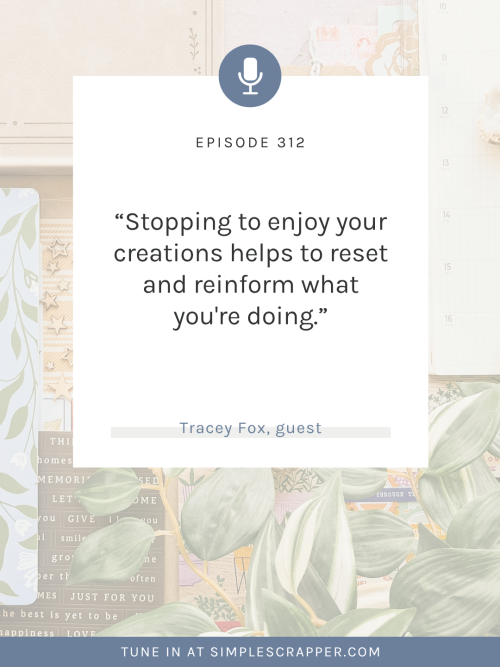
And, um, that always is something that, that I need to, like, keep remembering to do. It's like, oh, we're always focused on like, oh, I'm gonna make this page and this page and this page. But stopping to actually enjoy those creations and think about what you like about those pages and what went well or those projects. It really comes in handy. Even kind of helps you reset and reinform what you're doing.
Jennifer Wilson: Yeah, I think sometimes I will make, you know, 25, 30 layouts at a crop weekend and then I'll come back six months later and I, it's like I have, I've like blanked out. I don't remember all the stories that I scrapbooked. And it's, I, I have to keep a list. 'Cause otherwise I will, won't remember. But then I go back and I look through them and kind of, uh, appreciate them more one by one. Rather than the bulk of which, you know, that whatever kind of [01:10:00] out-of-body experience I had when I was creating them.
All right. Well, thank you all so much for spending time with me. As always, this has been a delight. I can't wait to continue the conversation with our upcoming episodes. And to all of our listeners, please remember that you have permission to Scrapbook Your Way.
Sign up to receive email updates
Enter your name and email address below and I'll send you periodic updates about the podcast.
How to Subscribe
The best way to listen to Scrapbook Your Way is with a podcast player on your mobile device or with iTunes on your computer. You can subscribe via Apple Podcasts, Google Podcasts, or by searching for “Scrapbook Your Way” in your favorite podcast app.
0 Comments